
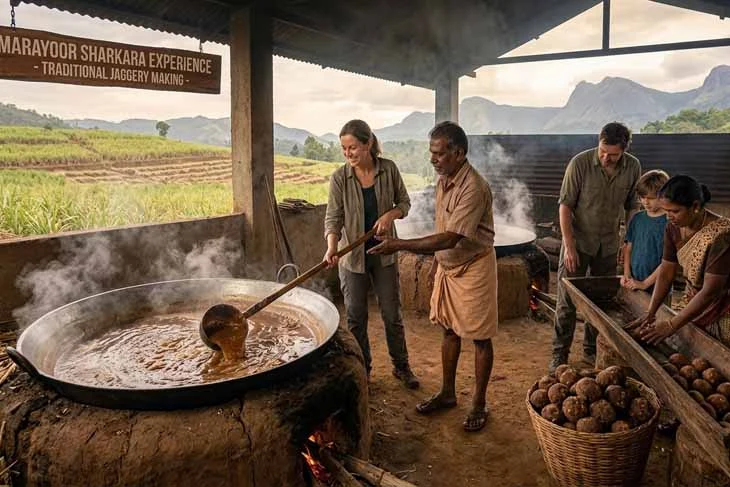
Nestled about 40 kilometres from Munnar in Kerala's picturesque Idukki district, Marayoor is unlike any other destination in South India. While Munnar is celebrated for its sprawling tea gardens and cool mountain climate, Marayoor introduces visitors to an entirely different landscape—golden sugarcane fields, ancient dolmens, fragrant sandalwood forests, and the world-famous Marayoor Sharkara (jaggery).
A journey to Marayoor is more than a sightseeing trip. It is an immersive cultural experience where visitors witness centuries-old farming traditions, interact with local communities, and enjoy one of Kerala's most unique agricultural landscapes. Whether you are a nature lover, foodie, photographer, or cultural explorer, the Marayoor Sharkara Experience promises memories that last a lifetime.
For guests staying at homestays in Munnar, a day trip to Marayoor offers the perfect combination of scenic beauty, heritage, and authentic rural experiences.
Why Marayoor is Special
Unlike many hill destinations dominated by tea plantations, Marayoor enjoys a unique microclimate suitable for cultivating high-quality sugarcane. The fertile soil, abundant sunshine, and pure mountain water contribute to producing sugarcane rich in natural sweetness.
Marayoor is famous for three exceptional treasures:
- Traditional Marayoor Sharkara
- Kerala's only natural sandalwood forests
- Ancient prehistoric dolmens
This remarkable combination makes Marayoor one of Kerala's most distinctive tourism destinations.
The Famous Marayoor Sharkara
Marayoor Sharkara is regarded as one of India's finest traditional jaggeries. Unlike industrial sugar production, this jaggery is prepared using traditional methods without chemical additives or artificial colouring.
The entire production process remains eco-friendly and largely unchanged for generations. Freshly harvested sugarcane is crushed using mechanical or traditional crushers. The extracted juice is filtered and slowly boiled in large iron cauldrons over wood-fired furnaces. Continuous stirring ensures impurities are removed naturally.
As the juice thickens, it transforms into rich golden syrup before finally being poured into moulds to cool and solidify.
The result is aromatic, mineral-rich jaggery with a deep caramel flavour that has earned Marayoor recognition across India.
Walking Through Sugarcane Farms
One of the greatest pleasures of visiting Marayoor is strolling through its lush sugarcane plantations.
Unlike commercial farms elsewhere, many fields remain family-owned, where traditional cultivation methods continue to thrive.
Visitors often enjoy :
- Walking between tall sugarcane rows
- Watching farmers harvest mature canes
- Learning cultivation techniques
- Tasting freshly cut sugarcane
- Photographing beautiful rural landscapes
The vibrant green fields set against the Western Ghats create stunning scenery throughout the year.
Traditional Jaggery Making Experience
The highlight of visiting Marayoor is witnessing jaggery production firsthand.
Many local units allow tourists to observe the complete manufacturing process.
Visitors can experience:
- Crushing fresh sugarcane
- Filtering raw juice
- Boiling juice in giant vessels
- Traditional stirring techniques
- Moulding hot jaggery
- Packaging finished products
The sweet aroma filling the air creates an unforgettable sensory experience.
Freshly prepared warm jaggery, sampled directly from the production unit, offers a taste unlike anything available in supermarkets.
Kerala's Only Natural Sandalwood Forests
Marayoor is home to Kerala's only natural sandalwood forests.
These protected forests are managed carefully due to the immense value of sandalwood trees. Walking through these forests offers visitors an opportunity to witness one of India's most treasured tree species in its natural habitat.
The forests support diverse wildlife including:
- Deer
- Giant squirrels
- Peacocks
- Numerous bird species
- Butterflies
- Small mammals
Nature lovers appreciate the peaceful atmosphere and pristine surroundings.
Ancient Dolmens and Megalithic Heritage
Marayoor also preserves fascinating prehistoric monuments.
Scattered across the region are hundreds of ancient dolmens known locally as Muniyara.
These stone burial chambers are believed to be over 2,000 years old and provide valuable insights into early human settlements.
History enthusiasts often combine visits to the dolmens with sugarcane farms and sandalwood forests, making Marayoor a destination rich in both natural and cultural heritage.
Scenic Drive from Munnar to Marayoor
The drive from Munnar to Marayoor ranks among Kerala's most beautiful road journeys.
The changing landscape is remarkable.
Travellers pass through:
- Tea plantations
- Dense forests
- Rolling grasslands
- Eucalyptus groves
- Mist-covered valleys
- Fruit orchards
- Rocky mountain formations
The road offers numerous viewpoints ideal for photography.
Every season transforms the scenery into a different visual masterpiece.
Local Village Life at Marayoor
Marayoor offers visitors a chance to experience authentic Kerala village life away from crowded tourist centres.
Local communities continue to preserve traditional agricultural practices, handicrafts, and rural lifestyles.
Visitors can interact with farmers, purchase fresh produce, and learn about local customs that have remained unchanged for generations.
Such cultural exchanges create meaningful travel experiences rarely found in commercial destinations.
Local Food to Enjoy
No visit to Marayoor is complete without tasting local cuisine prepared using fresh ingredients.
Popular dishes include:
- Traditional Kerala meals
- Fresh sugarcane juice
- Homemade jaggery sweets
- Banana fritters
- Tapioca dishes
- Coconut-based curries
- Herbal drinks
Many homestays also serve farm-fresh meals prepared using locally sourced vegetables and spices.
Shopping in Marayoor
Visitors often return home carrying authentic local products.
Popular purchases include:
- Original Marayoor Sharkara
- Sugarcane syrup
- Local spices
- Wild honey
- Herbal products
- Homemade snacks
- Handmade crafts
Buying directly from local producers supports rural livelihoods while ensuring product authenticity.
Photography Opportunities at Marayoor
Marayoor is a paradise for photographers.
Every corner offers stunning subjects:
- Endless sugarcane fields
- Traditional jaggery units
- Sandalwood forests
- Rural landscapes
- Ancient dolmens
- Colourful sunsets
- Mountain backdrops
- Local farmers at work
Golden-hour photography during early morning and evening is particularly rewarding.
Best Time to Visit at Marayoor
Marayoor can be visited throughout the year.
October to February offers cool, pleasant weather ideal for sightseeing.
June to September transforms the region into a lush green paradise during the monsoon.
March to May provides excellent opportunities to observe sugarcane harvesting and jaggery production.
Each season presents a different charm.
Stay at a Homestay Near Munnar
Travellers staying in homestays around Munnar can easily plan a full-day excursion to Marayoor.
Homestays offer several advantages:
- Personalized hospitality
- Traditional Kerala cuisine
- Local sightseeing guidance
- Comfortable accommodation
- Peaceful natural surroundings
- Affordable pricing
Many hosts also help arrange private taxis and guided village tours.
Sustainable Tourism in Marayoor
Tourism in Marayoor supports local agriculture, traditional industries, and environmental conservation.
Visitors can contribute by:
- Purchasing locally made products
- Respecting forest regulations
- Avoiding plastic waste
- Supporting local guides
- Choosing eco-friendly accommodations
- Protecting natural habitats
Responsible tourism ensures future generations continue enjoying Marayoor's unique heritage.
Nearby Attractions
While visiting Marayoor, travellers can also explore nearby destinations including:
- Chinnar Wildlife Sanctuary
- Kanthalloor
- Lakkam Waterfalls
- Eravikulam National Park
- Pampadum Shola National Park
- Anamudi Viewpoints
- Munnar Tea Gardens
Combining these attractions creates a memorable two or three-day itinerary.
Why Every Traveller Should Visit Marayoor
Marayoor is far more than a scenic village. It is a living museum of Kerala's agricultural traditions, cultural heritage, and natural beauty. The harmonious blend of sugarcane farms, authentic jaggery production, sandalwood forests, prehistoric monuments, and welcoming village life creates an experience that is impossible to replicate elsewhere.
Whether you are travelling with family, friends, or as a solo explorer, the Marayoor Sharkara Experience offers something for everyone. Staying at a homestay in Munnar enhances this journey by providing local insights, warm hospitality, and convenient access to one of Kerala's most fascinating destinations.
If you wish to discover the authentic soul of Kerala beyond tea plantations, Marayoor deserves a prominent place on your travel itinerary.
0 Comments
Post Comment